Concentrates
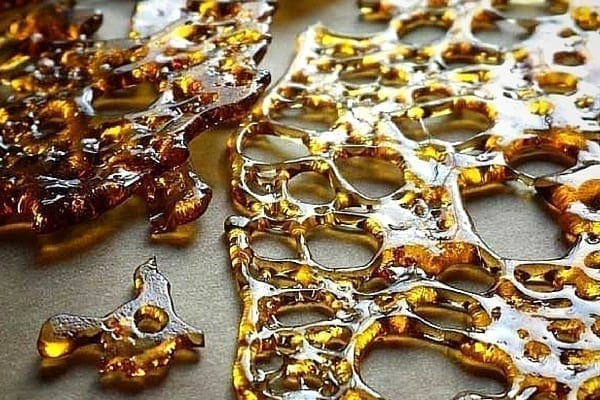
Definition: Cannabis concentrates are products made by separating cannabinoids and terpenes from the plant into a much stronger form. Common types include shatter, wax, live resin, rosin, hash, and distillate. Solvent-based concentrates average roughly 54% to 69% THC, compared with about 15% for dried flower, according to the National Institute on Drug Abuse.
How Are Concentrates Made?
There are two broad approaches:
- Solvent-based: butane, propane, CO2, or ethanol dissolves the resin, then is purged out. This produces BHO, shatter, wax, live resin, and distillate.
- Solventless: physical methods like sifting, ice water, heat, and pressure. This produces kief, hash, bubble hash, and rosin.
What Are the Most Common Types of Concentrates?
| Type | Texture | Method |
|---|---|---|
| Shatter | Clear, glassy, brittle | Solvent |
| Wax, budder, crumble | Soft, opaque | Solvent |
| Live resin | Sappy, aromatic | Solvent, fresh-frozen plants |
| Distillate | Thick, clear oil | Solvent, then distilled |
| Rosin | Sticky sap or budder | Solventless |
| Kief and hash | Powder or pressed block | Solventless |
How Do You Use Concentrates?
Concentrates are usually dabbed on a dab rig, vaporized in a wax pen or vape cartridge, added to flower, or used to make edibles.
Are Concentrates Safe?
The main concern is dose. NIDA warns that high-THC concentrates raise the risk of anxiety, paranoia, dependence, and, in vulnerable people, psychosis. Making solvent concentrates at home has also caused explosions and serious burns. Buy lab-tested products from licensed retailers and start with a very small amount.
Related terms: BHO, Rosin, Dabbing, Trichomes
Sources: NIDA: Cannabis Concentrates DrugFacts; DEA Drug Fact Sheet: Vaping and Marijuana Concentrates.