
Cannabinoids
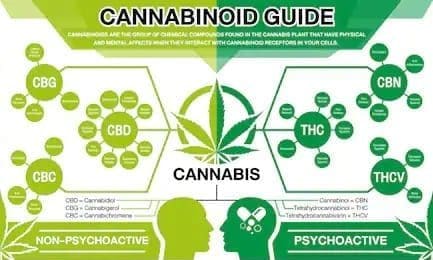
Definition: Cannabinoids are chemical compounds that act on the body’s endocannabinoid system, mainly through CB1 and CB2 receptors. The cannabis plant makes more than 100 of them, called phytocannabinoids, with THC and CBD the best known. The body makes its own, called endocannabinoids, and labs make synthetic versions.
What Are the Main Types of Cannabinoids?
- Phytocannabinoids: made by the cannabis plant, such as THC, CBD, CBG, and CBN
- Endocannabinoids: made by the body, mainly anandamide and 2-AG
- Synthetic cannabinoids: made in labs, from FDA-approved drugs like dronabinol to dangerous street products sold as “spice” or “K2”
What Are the Most Common Cannabinoids in Cannabis?
| Cannabinoid | Intoxicating? | Notes |
|---|---|---|
| THC | Yes | The main compound behind the high |
| CBD | No | Active ingredient in the seizure drug Epidiolex |
| CBG | No | Its acid form, CBGA, is the precursor plants use to make THC and CBD |
| CBN | Mildly | Forms as THC breaks down with age, heat, and light |
| THCV | At high doses | Found in some African landrace strains |
| CBC | No | A less-studied minor cannabinoid |
How Do Cannabinoids Work?
Cannabinoids act on cannabinoid receptors. THC activates the CB1 receptor in the brain, which is why it’s intoxicating. CBD and many minor cannabinoids bind these receptors weakly and work through other targets. In the living plant, most cannabinoids exist as acids, like THCA and CBDA, which need heat to decarboxylate into their active forms.
Where Are Cannabinoids Made in the Plant?
Cannabinoids are produced in the resin glands, or trichomes, mostly on the flowers of female plants. That’s why buds, not leaves or stems, carry most of the potency.
Related terms: THC, Cannabidiol (CBD), Cannabinoid Receptors, Entourage Effect
Sources: Lu HC, Mackie K, “An Introduction to the Endogenous Cannabinoid System,” Biological Psychiatry, 2016; National Institute on Drug Abuse: Cannabis (Marijuana).