Cannabis 101: A Beginner’s Guide to THC, CBD, Dosing, and Safety
Quick answer: Cannabis is a plant whose main active compounds are THC, which causes the high, and CBD, which doesn’t. If you’re new, buy from a licensed dispensary, choose a low-THC product, and start small: a puff or two, or an edible with 2.5 mg of THC or less. Wait before taking more. Never drive high, keep products away from kids and pets, and check your state’s laws.
Key takeaways
- THC is intoxicating; CBD by itself is not.
- “Indica” and “sativa” labels are a rough guide at best. THC level, terpenes, dose, and your own body matter more.
- Start low and go slow, especially with edibles, which can take up to 2 hours to kick in.
- As of October 2026, legality depends on your state, and most cannabis remains federally illegal.
What is cannabis and how does it work?
Cannabis is a plant that contains more than 100 compounds called cannabinoids, along with aromatic oils called terpenes. Cannabinoids interact with your endocannabinoid system, a network of receptors involved in things like mood, memory, appetite, and pain signaling.
The CDC notes that cannabis affects the parts of the brain responsible for memory, learning, attention, decision making, coordination, emotions, and reaction time. That’s why it feels the way it does, and also why it impairs driving.
What’s the difference between THC and CBD?
THC (tetrahydrocannabinol) is the compound that causes the high. It can bring relaxation, euphoria, hunger, and altered perception, and in larger doses, anxiety, a racing heart, or paranoia.
CBD (cannabidiol) doesn’t cause a high on its own, according to the CDC. It’s sold in many forms and studied for several uses, but the only FDA-approved CBD medication is Epidiolex, for certain seizure disorders. Evidence for many other CBD claims is limited.
| THC | CBD | |
|---|---|---|
| Causes a high? | Yes | No, by itself |
| Impairs driving? | Yes | Not on its own, but products may contain THC |
| Common reported effects | Euphoria, relaxation, appetite, altered perception | Reported calm; evidence varies by use |
| Possible downsides | Anxiety, paranoia, impairment, dependence | Drowsiness, drug interactions |
CBD can interact with other medications, so check with a pharmacist or doctor if you take prescriptions.
Do indica and sativa actually mean anything?
You’ll see indica, sativa, and hybrid on almost every menu. Traditionally, indica is sold as relaxing and sativa as energizing. In reality, these terms describe plant shape and ancestry more than effects, and most modern strains are hybrids anyway.
What shapes your experience more is the THC and CBD content, the terpene profile, the dose, how you take it, and your own body and tolerance. Strain names also aren’t standardized, so the same name can mean different plants from different growers. Use labels as a loose starting point, and check the lab certificate of analysis (COA) for actual cannabinoid content. Our guide to how terpene profiles affect your experience goes deeper.
How do you choose a product at a dispensary?
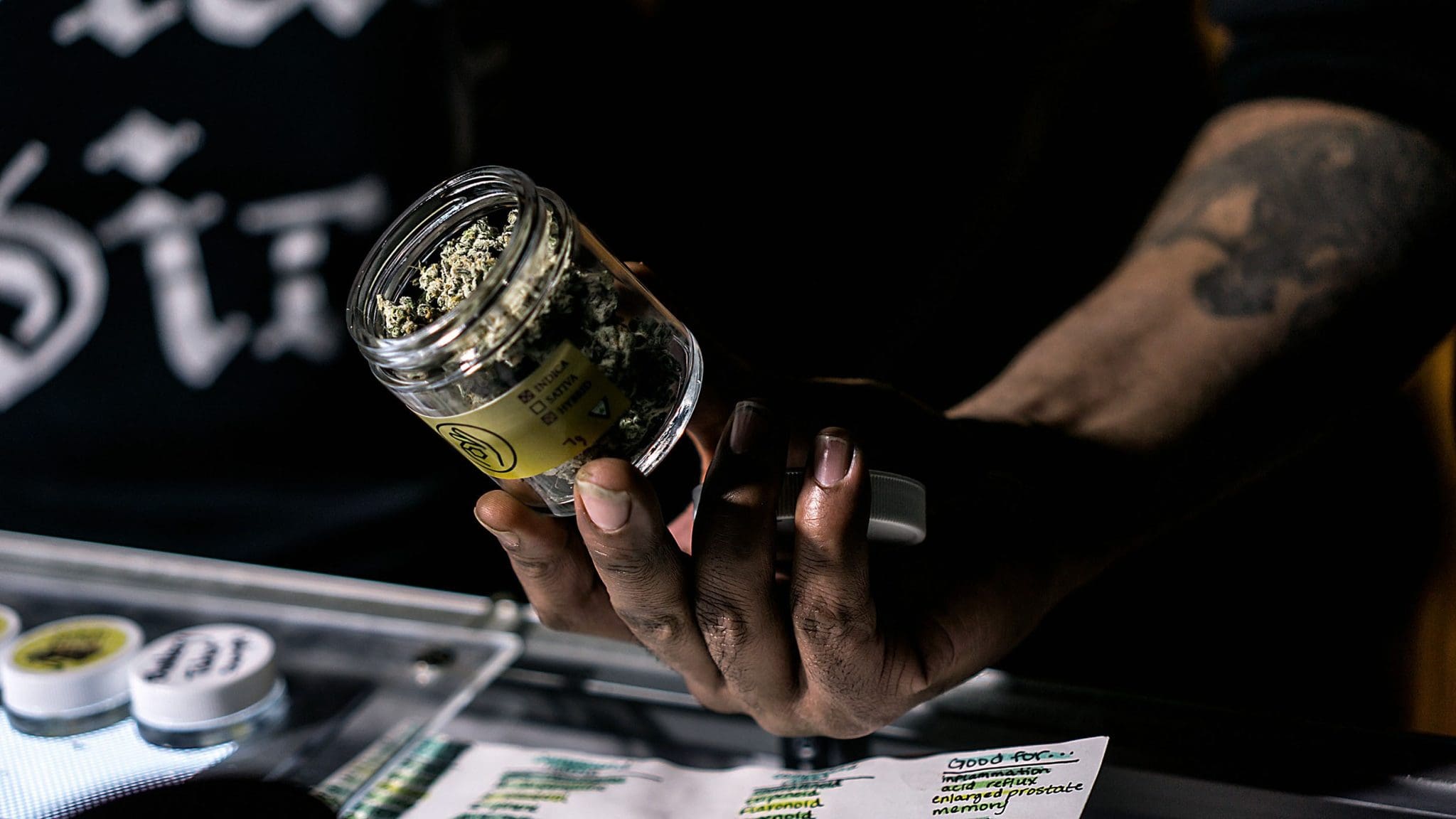
A licensed dispensary sells lab-tested products and has staff, called budtenders, who can answer questions. Here’s how to shop as a beginner:
- Bring a valid ID. Adult-use stores require you to be 21 or older. Medical stores require a medical card in most states.
- Tell the budtender you’re new. Say what you’re hoping for, like relaxing at night or easing into a social setting, and ask for something mild.
- Pick a lower-THC product. Health Canada’s guidance for new consumers suggests inhaled products under 10% THC with equal or higher CBD, or edibles with 2.5 mg of THC or less.
- Choose a method you’re comfortable with. Pre-rolls and flower work fast; edibles last longer but come on slowly. Our consumption methods guide compares every option.
- Read the label. Check THC and CBD per serving, the serving size, and the lab-test information.
Don’t be shy about asking questions. Budtenders field beginner questions all day.
How much cannabis should a beginner take?
Start low and go slow. That advice exists because the most common bad experience is simply taking too much.
If you’re inhaling
Take one or two small puffs and wait. Health Canada says effects begin within seconds to minutes, reach full strength in 10 to 30 minutes, and can last up to 6 hours. Wait at least 30 minutes before taking more.
If you’re eating or drinking it
Start with 2.5 mg of THC or less. Effects can take 30 minutes to 2 hours to begin, up to 4 hours to peak, and last up to 12 hours. Wait the full 4 hours before taking more. NIDA notes that the slow onset is why people often take more than they meant to. Our edibles dosage guide walks through the math.
If you take too much
Find a calm, comfortable place, sip water, eat a snack, and remind yourself the feeling will pass. Call for medical help if someone has chest pain, trouble breathing, a seizure, or can’t stay awake.
Is cannabis legal where you live?
As of October 2026, cannabis law in the U.S. depends heavily on your state. Around 24 states plus Washington, D.C., allow adult-use (recreational) cannabis, and about 40 states have medical programs. Each state sets its own age limits, possession limits, home-grow rules, and rules on where you can use it. Public use and crossing state lines with cannabis are generally illegal, even between two legal states.
At the federal level, things changed in April 2026. The Department of Justice and DEA moved FDA-approved marijuana products and marijuana products authorized under qualifying state medical marijuana licenses to Schedule III of the Controlled Substances Act. Other marijuana, including adult-use products, remains Schedule I. An expedited administrative hearing on broader rescheduling began in June 2026, and as of October 2026, that decision is still pending.
Hemp-derived products, which trace back to the 2018 Farm Bill, follow separate rules that have been changing. Check your state’s current law before buying any THC product, including delta-8 THC. This isn’t legal advice.
How do you use cannabis safely?
Never drive high
The CDC says cannabis slows reaction time, impairs coordination, and distorts perception, and that after alcohol, it’s the substance most often linked to impaired driving. Plan a ride before you use cannabis.
Don’t mix it with alcohol
Combining cannabis and alcohol can increase impairment, according to the CDC. Health Canada also advises against mixing cannabis with nicotine, other drugs, or health products.
Protect kids and pets
Edibles that look like candy or snacks can seriously sicken children, and pets are vulnerable too. Store all cannabis in its original child-resistant packaging, locked and out of reach. If a child or pet eats cannabis, call Poison Control at 1-800-222-1222, your vet, or 911 in an emergency.
Know the longer-term risks
The CDC estimates that about 3 in 10 people who use cannabis have cannabis use disorder. Frequent use and starting young raise the risk. Heavy use is also linked to cannabinoid hyperemesis syndrome, which causes repeated vomiting. If you’re pregnant, breastfeeding, or have a heart or mental health condition, talk to a healthcare provider first.
Frequently Asked Questions
What should a first-time cannabis user try?
Many beginners do best with a low-THC flower or pre-roll, taking one or two small puffs, because effects show up quickly and fade sooner. If you prefer not to inhale, a low-dose edible of 2.5 mg THC or less works, as long as you wait up to 4 hours before taking more.
How long does a cannabis high last?
Inhaled cannabis usually lasts up to about 6 hours, with the strongest effects in the first hour or two. Edibles can last up to 12 hours. Health Canada notes some residual effects can linger up to 24 hours, so plan accordingly before driving or working.
Can CBD get you high?
CBD by itself isn’t intoxicating, according to the CDC. Some CBD products contain small amounts of THC, though, and labels aren’t always accurate. If avoiding THC matters to you, for example because of drug testing, choose products with a lab certificate of analysis showing the cannabinoid content.
Do I need a medical card?
In states with adult-use cannabis, adults 21 and older can usually buy without one. In medical-only states, you need a state medical card. Some people in adult-use states still get a card because medical products may have different taxes or purchase limits. Rules vary, so check your state’s program.
Is it normal to feel nothing the first time?
Yes, it happens fairly often. You may have taken a very small dose, inhaled lightly, or simply need more time, especially with edibles. Don’t rush to take more. Try again another day with a slightly higher dose rather than stacking doses in one session.
Sources: CDC: About Cannabis; CDC: Cannabis and Driving; National Institute on Drug Abuse: Cannabis (Marijuana); Health Canada: What you need to know if you choose to consume cannabis; The Ohio State University: Federal agencies issue final order on marijuana scheduling
This article is for general education and isn’t medical advice. Talk to a healthcare provider before using cannabis for a health condition.
Related reading: Cannabis Culture and Beating the Test: A Guide to THC Detox.