
Entourage Effect
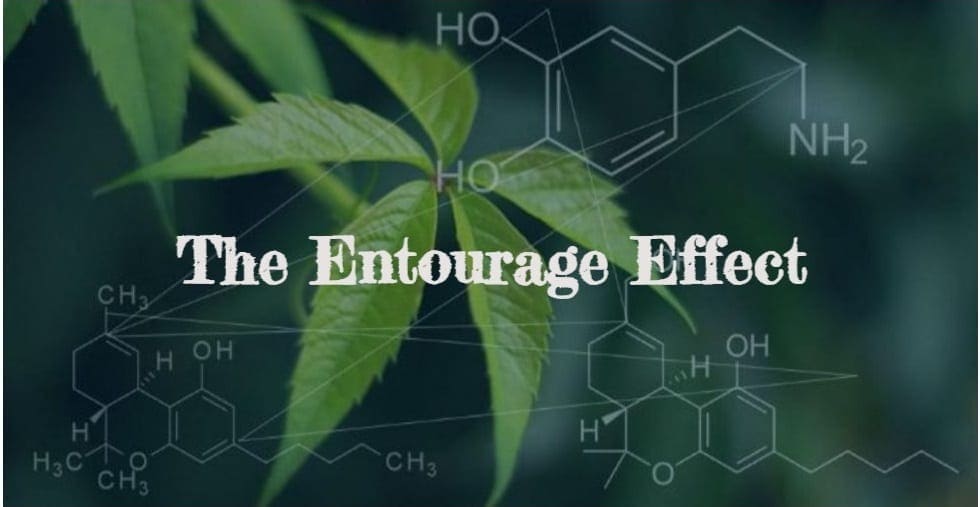
Definition: The entourage effect is the theory that cannabis compounds, including cannabinoids like THC and CBD and aromatic terpenes, work together to produce effects that differ from any single compound on its own. It’s the main argument for whole-plant or full-spectrum products over isolates. The evidence so far is mixed.
Where Did the Term “Entourage Effect” Come From?
Israeli researchers Shimon Ben-Shabat, Raphael Mechoulam, and colleagues coined the term in a 1998 study of the body’s own endocannabinoids. They found that inactive “entourage” molecules boosted the activity of the endocannabinoid 2-AG. In 2011, neurologist Ethan Russo extended the idea to the cannabis plant, arguing that terpenes and minor cannabinoids could shape how THC feels.
Is the Entourage Effect Real?
It depends which claim you mean. Some lab and animal work supports interactions between cannabis compounds, and the terpene caryophyllene clearly acts on cannabinoid receptors. Other studies have pushed back: a 2019 study in Cannabis and Cannabinoid Research found that common cannabis terpenes did not change how THC activated CB1 or CB2 receptors in cell tests. The honest summary is that the entourage effect is plausible, popular, and not yet proven in rigorous human trials.
What Does the Entourage Effect Mean for Choosing Products?
It’s the reason you’ll see three product categories:
- Full-spectrum: contains the plant’s full range of cannabinoids and terpenes, including some THC
- Broad-spectrum: keeps most compounds but removes THC
- Isolate: a single purified compound, usually CBD
If you’re curious how terpenes might shape your high, read how terpene profiles affect your cannabis experience.
Related terms: Terpenes, Cannabinoids, Cannabidiol (CBD), Cannabinoid Receptors
Sources: Russo EB, “Taming THC: potential cannabis synergy and phytocannabinoid-terpenoid entourage effects,” British Journal of Pharmacology, 2011; Ben-Shabat S, Mechoulam R et al., European Journal of Pharmacology, 1998.