
Caryophyllene
Definition: Caryophyllene (beta-caryophyllene) is a spicy, peppery terpene found in cannabis, black pepper, cloves, and hops. It’s unusual because it binds directly to the body’s CB2 cannabinoid receptors, which is why researchers call it a “dietary cannabinoid.” It does not bind CB1 receptors, so it won’t get you high.
What Is Caryophyllene?
Caryophyllene is a sesquiterpene, a larger terpene molecule built from three isoprene units (formula C15H24). It’s one of the most common terpenes in cannabis and gives many strains their warm, woody, peppery bite.
Why Does Caryophyllene Bind to CB2 Receptors?
In 2008, a research team led by Jürg Gertsch published a study in the Proceedings of the National Academy of Sciences showing that beta-caryophyllene selectively activates CB2 receptors. CB2 receptors sit mainly on immune cells and help regulate inflammation. CB1 receptors, which THC activates to cause a high, are left alone. That combination makes caryophyllene a focus of anti-inflammatory and pain research, though most of that work is still in animals.
Where Is Caryophyllene Found?
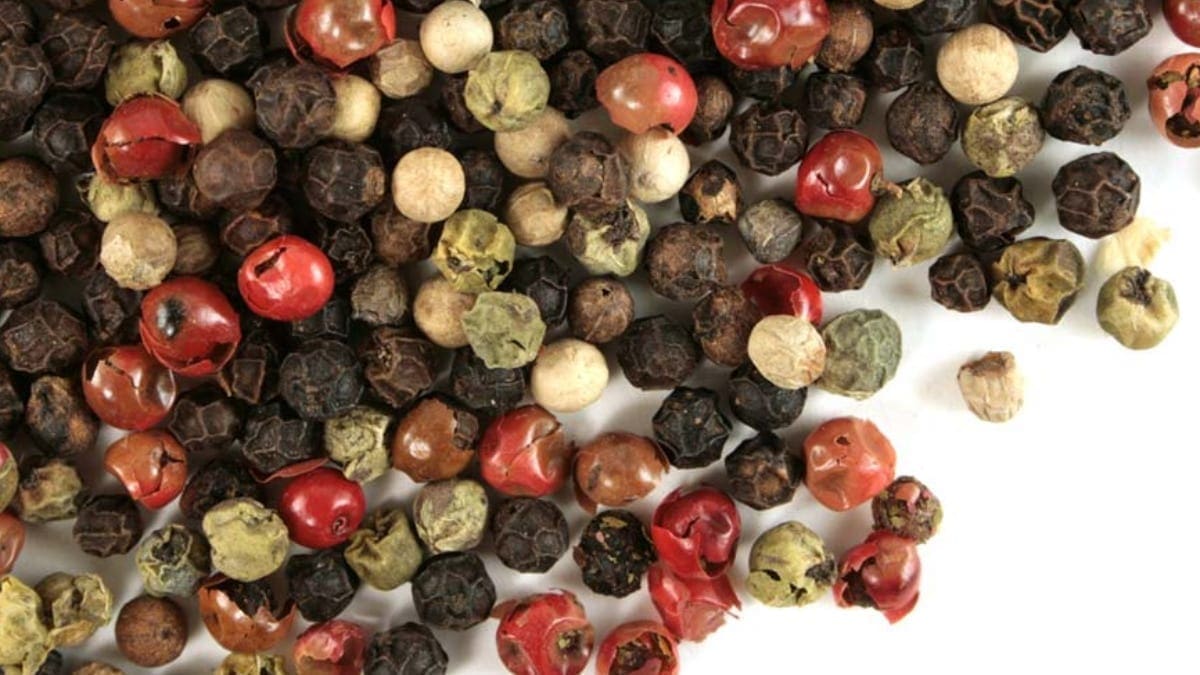
Black pepper is the classic source. Caryophyllene also shows up in cloves, hops, oregano, basil, rosemary, and cinnamon. It’s approved as a food additive in the US, which is part of why it’s eaten so widely without anyone noticing.
Does Black Pepper Help If You’re Too High?
Sniffing or chewing black peppercorns is a popular folk remedy for feeling too high, and caryophyllene is the usual explanation. The evidence is anecdotal. No controlled human study has shown it works, but it’s harmless to try.
Learn how caryophyllene stacks up against other terpenes in our guide to the top 5 terpenes in cannabis.
Related terms: Terpenes, Humulene, Cannabinoid Receptors, Entourage Effect
Sources: Gertsch J et al., “Beta-caryophyllene is a dietary cannabinoid,” PNAS, 2008; Russo EB, British Journal of Pharmacology, 2011.