Decarboxylate
Definition: To decarboxylate cannabis, or “decarb” it, means to heat it so the raw acid forms of cannabinoids, like THCA and CBDA, lose a carboxyl group and become active THC and CBD. Smoking and vaping do this instantly. For edibles and tinctures, you must decarb the cannabis first, or the final product will be weak.
Why Does Cannabis Need to Be Decarboxylated?
Living and freshly dried cannabis contains mostly THCA, which isn’t intoxicating. Heat releases carbon dioxide from the molecule and converts it into THC, the compound that activates CB1 receptors. That’s why eating raw flower doesn’t get you high. CBDA converts into CBD the same way.
How Do You Decarb Weed at Home?
- Preheat the oven to around 240°F (115°C).
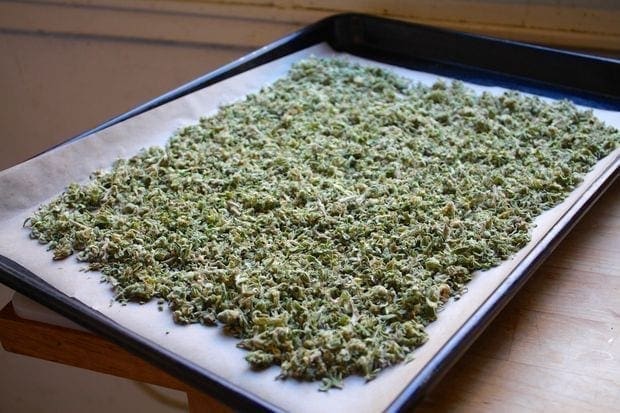
- Break the flower into small pieces and spread it on a parchment-lined baking sheet.
- Bake for about 30 to 45 minutes, until it turns light golden-brown and dry.
- Let it cool, then infuse it into butter or oil for edibles.
Ovens vary, so an oven thermometer helps. Decarbing smells strong, and sealed decarb devices or oven bags can reduce odor.
Can You Overdo Decarboxylation?
Yes. Too much heat or time degrades THC into CBN, a mildly intoxicating cannabinoid associated with sleepiness, and evaporates terpenes. Low and slow gives better results than high heat.
Does Decarboxylation Happen Naturally?
Slowly. Stored flower gradually decarboxylates over time, especially with heat and light, but not nearly enough to replace deliberate decarbing for edibles. Distillate is already decarboxylated during production.
Ready to cook? See our ultimate guide to making cannabutter.
Related terms: Edibles, Canna Oil, Cannabinoids, THC
Sources: National Institute on Drug Abuse: Cannabis (Marijuana); Lu HC, Mackie K, Biological Psychiatry, 2016.