
High-THC Strains: What Potency Really Means
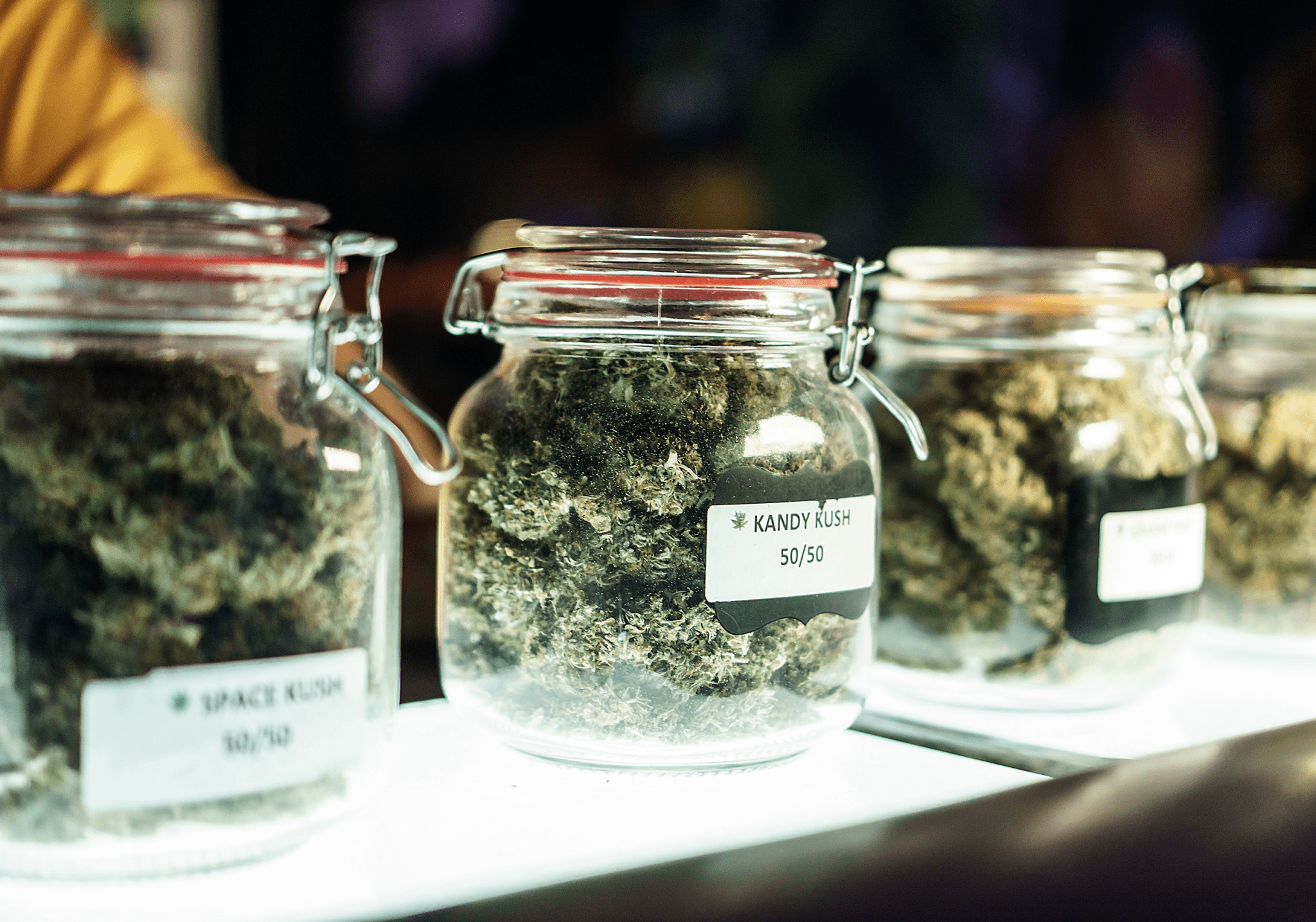
Quick answer: High-THC strains are cannabis varieties that labs and growers often report testing above roughly 20% THC, such as Gorilla Glue #4, Bruce Banner, and Ghost Train Haze. But the number on the jar isn’t a promise. THC varies by grower and batch, labels are often inflated, and higher potency raises the odds of anxiety and overdoing it.
- Average THC in U.S. cannabis has climbed steadily for decades, according to federal monitoring data.
- Strain names are a loose guide. Check the lab certificate of analysis (COA) for the batch you’re buying.
- Research has found many retail flower labels overstate THC.
- Higher THC isn’t the same as a better experience. Dose and terpenes matter too.
What counts as a high-THC strain?
There’s no official cutoff. In everyday dispensary talk, flower that tests at roughly 20% THC or more gets called high-THC. Anything listed in the mid to high 20s gets marketed as top shelf.
Keep in mind that this is a modern standard. A widely cited 2016 analysis of tens of thousands of seized samples found average THC rose from about 4% in 1995 to about 12% in 2014, while CBD fell. NIDA’s ongoing potency data shows the average kept rising after that. So a strain your friend calls “mid” would have been unusually strong a generation ago.
Which strains are commonly reported as high-THC?
The strains below show up again and again on high-THC lists. The ranges are what’s often reported by labs and retailers, not guarantees. The same name can test very differently from one grower or harvest to the next, and genetic studies have found that strains sold under the same name aren’t always genetically alike.
| Strain | Often reported THC | Commonly reported effects |
|---|---|---|
| Gorilla Glue #4 (GG4) | Low to high 20s | Heavy body relaxation, strong couch-lock |
| Godfather OG | Mid to high 20s | Sedating, sleepy, very relaxed |
| Bruce Banner | Low to high 20s | Fast-hitting euphoria, then body calm |
| Ghost Train Haze | Low to mid 20s | Racy, cerebral, talkative |
| Chemdawg | High teens to mid 20s | Intense head high, diesel aroma |
| Girl Scout Cookies (GSC) | High teens to mid 20s | Euphoric, relaxed, sweet and earthy |
| Gelato | High teens to mid 20s | Balanced, happy, mellow body feel |
| Wedding Cake | Low to mid 20s | Calming, appetite, evening use |
| Kosher Kush | Low to mid 20s | Heavy, sleepy, classic Kush feel |
A closer look at a few favorites
Gorilla Glue #4 earned its name from resin so sticky it gums up scissors. People commonly report a heavy, glued-to-the-couch effect, so most save it for nighttime.
Bruce Banner is often described as hitting hard and fast with a burst of euphoria. Newer users tend to find a single puff is plenty.
Ghost Train Haze is a sativa-leaning pick with a citrus and pine nose. Its reported effects are energetic and heady, which some people enjoy and others find edgy.
Godfather OG and Kosher Kush sit on the sleepy end. Both are commonly described as strong indica-style relaxers.
GSC, Gelato, and Wedding Cake are the dessert family. They’re popular for flavor as much as strength, and reported effects lean happy and relaxed.
Chemdawg is known for a sharp, fuel-like smell and an intense, cerebral high.
Is higher THC always better?
No. THC is the main driver of the high, but it isn’t the only thing shaping how a strain feels. Terpenes and minor cannabinoids influence aroma and are thought to shape effects, an idea often called the entourage effect. Research on how much they matter in people is still limited.
In practice, plenty of people prefer a 17% strain with a terpene profile they love over a 28% strain that makes them anxious. More THC per puff also means it’s easier to overshoot your comfort zone. If you want the same effect from stronger flower, you just use less.
Why might the THC on the label be wrong?
Label inflation is a real problem. A 2023 PLOS ONE study tested flower from Colorado dispensaries and found that about 70% of samples had THC more than 15% lower than the label stated. A later PLOS ONE study of Colorado products found flower labels overstated THC more than edible or concentrate labels did.
Why does this happen? Shoppers tend to buy the highest number, which creates pressure toward generous results. Potency also varies within a single plant and drops over time as cannabis ages. That’s why the most useful habit is reading the batch COA:
- Look for “Total THC,” which accounts for THCA converting to THC when heated.
- Check the test date and the lab name.
- Look at the terpene section if it’s included. It often tells you more about flavor and feel than the strain name.
What are the risks of high-THC cannabis?
A 2022 systematic review in The Lancet Psychiatry found that using higher-potency cannabis was associated with a greater risk of addiction and psychosis compared with lower-potency products. Links to anxiety and depression were less clear. That doesn’t mean one session causes harm, but it’s a good reason not to chase potency for its own sake.
Other things to know:
- Strong THC can trigger short-term anxiety, racing heart, or paranoia, especially if you’re new.
- Frequent heavy use is linked to cannabis use disorder and, in some people, cannabinoid hyperemesis syndrome.
- Don’t drive after using, and don’t mix with alcohol until you know how you react.
How do tolerance and dosing work with strong strains?
Your body adapts to regular THC use, so the same amount feels weaker over time. A tolerance break of a few days to a few weeks is the simplest way to reset.
If you’re trying a high-THC strain for the first time, take one small puff, wait 10 to 15 minutes, and decide from there. With edibles made from strong flower, the wait is much longer. Our guide to edible dosing walks through the math.
Frequently Asked Questions
What is the strongest strain of weed?
There isn’t a reliable single answer. Strains like Godfather OG, Gorilla Glue #4, and Bruce Banner are often reported near the top, but potency depends on the grower, the batch, and how fresh it is. Labels can also be inflated. The strongest jar on any given shelf is best judged by a current lab COA, not the strain name.
Is 30% THC flower real?
You’ll see it advertised, but be skeptical. Independent testing in Colorado found many flower labels overstated THC, often by a wide margin. Some flower does test very high, yet numbers near or above 30% deserve a close look at the lab, the test date, and whether the result reflects Total THC.
Does higher THC mean a better high?
Not necessarily. THC sets the intensity, but terpenes, minor cannabinoids, your tolerance, your mood, and your setting all shape the experience. Many people find mid-potency strains with a terpene profile they like more enjoyable than the strongest option available, and they’re easier to dose comfortably.
Are high-THC strains good for beginners?
Usually not as a starting point. Beginners have no tolerance, so a strong strain can easily cause anxiety or a racing heart. If you do try one, take a single small inhale, wait at least 10 to 15 minutes, and stay somewhere comfortable. Lower-THC or balanced THC and CBD options are gentler places to start.
How can I check how strong my cannabis really is?
Ask for the certificate of analysis for that exact batch. Many dispensaries print a QR code on the label that links to it. Look for Total THC, the testing lab, and the test date. Even then, treat the number as an estimate, since potency varies within a harvest and declines with age.
Sources: ElSohly et al., Changes in Cannabis Potency Over the Last 2 Decades (1995-2014), Biological Psychiatry (PMC); NIDA, Cannabis Potency Data; Schwabe et al., Uncomfortably high: Testing reveals inflated THC potency on retail Cannabis labels, PLOS ONE; Limbacher et al., Commercial cannabis product testing: Fidelity to labels and regulations, PLOS ONE; Petrilli et al., Association of cannabis potency with mental ill health and addiction: a systematic review, The Lancet Psychiatry (PubMed)
This article is for general education and isn’t medical advice. Talk to a healthcare provider before using cannabis for a health condition.