
Myclobutanil
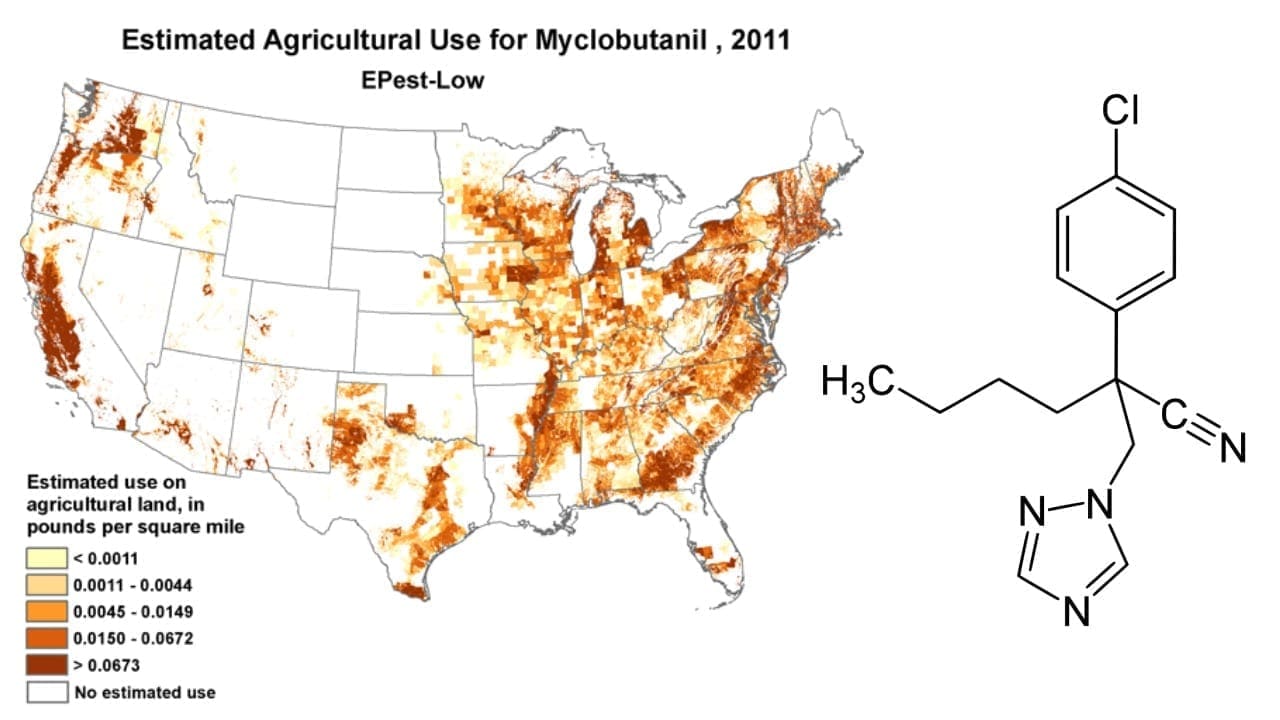
Definition: Myclobutanil is a synthetic fungicide used on crops like grapes and fruit to control mold and mildew. It’s banned for use on cannabis in many legal states because when it’s heated or burned, as happens when cannabis is smoked, it can break down and release hydrogen cyanide, a toxic gas.
Why Is Myclobutanil a Problem in Cannabis?
Myclobutanil is approved for some food crops, which are eaten, not smoked. Cannabis is usually inhaled after heating, and laboratory studies show myclobutanil can decompose into hydrogen cyanide and other harmful compounds at high temperatures. It’s also a systemic fungicide, meaning it’s absorbed into the plant rather than staying on the surface, so it can’t simply be washed off.
Why Did Growers Use It?
It’s effective against powdery mildew and other fungal problems like bud rot. It was sold in garden products such as Eagle 20, and before strict cannabis testing rules, some growers used it. Its discovery in licensed products has led to recalls in both the United States and Canada.
How Do You Know if Cannabis Contains Myclobutanil?
Licensed cannabis in regulated states must pass pesticide testing, and myclobutanil is on most banned or tightly limited lists. Buying from licensed retailers with batch lab results is the most reliable protection. Unregulated products, including many from the illicit market, aren’t tested.
What Do Growers Use Instead?
Prevention-first approaches: humidity and airflow control, clean clones, beneficial microbes, and state-approved products where allowed.
Related terms: Botrytis Cinerea, Bud Rot, Clone, Dispensary
Sources: PubChem: Myclobutanil; California Department of Cannabis Control.