
Blue Dream Strain: Profile, Effects, and Blue Dream vs. Jack Herer
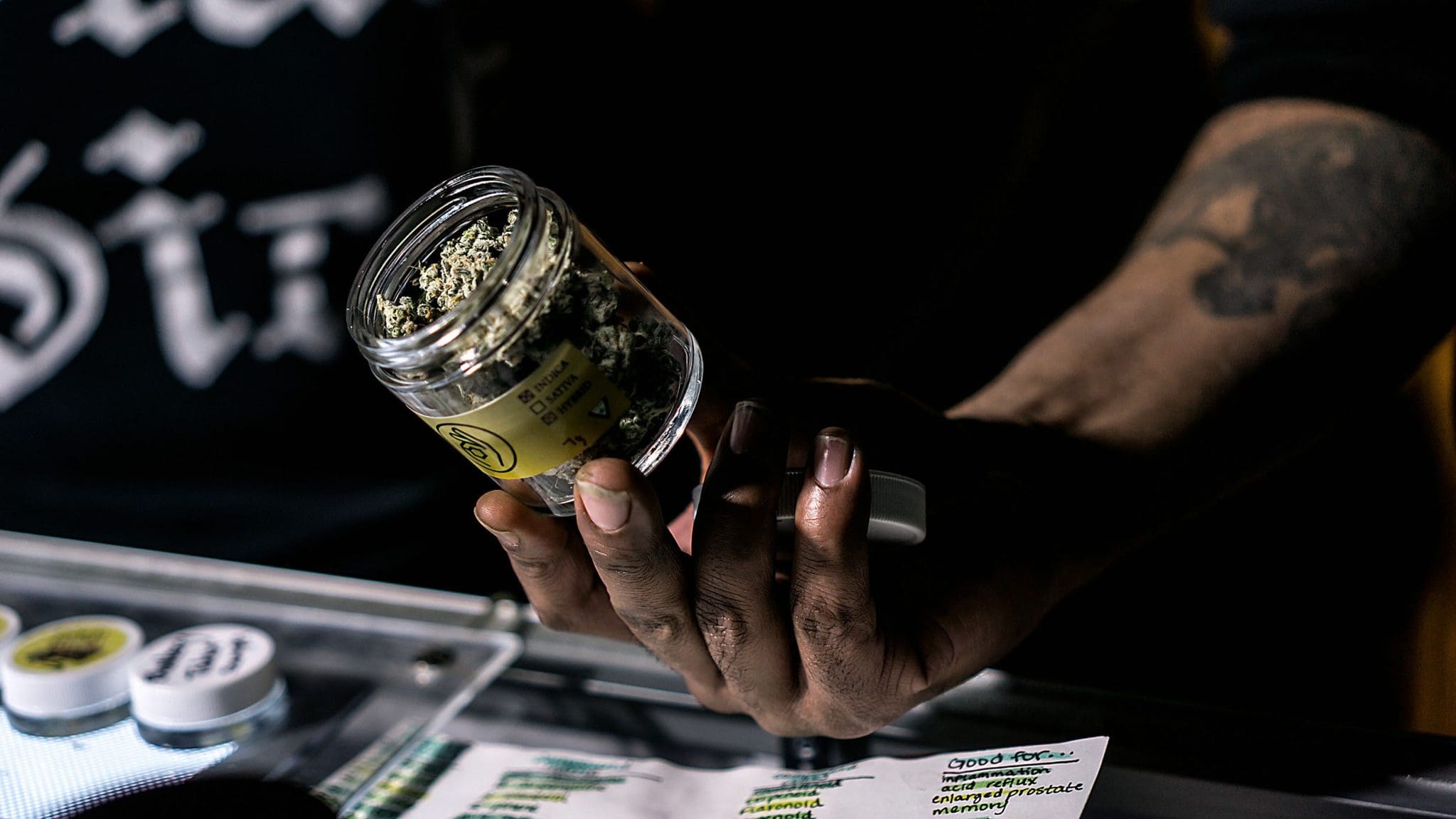
Quick answer: Blue Dream is a popular hybrid commonly reported as a cross of Blueberry and Haze. It’s known for a sweet berry aroma and a balanced effect that people describe as gently uplifting with mild body relaxation. Commonly reported terpenes include myrcene, pinene, and caryophyllene. THC varies by grower and batch, so check the lab COA before you buy.
- Lineage is commonly reported as Blueberry x Haze, with roots in California.
- Reported effects are balanced, making it a popular daytime hybrid.
- Compared with Jack Herer, Blue Dream is usually described as softer and more relaxed.
- Potency and terpenes can differ a lot between growers.
What is Blue Dream?
Blue Dream is one of the best-known hybrid strains in North America. It’s usually described as sativa-leaning, and it’s been a dispensary staple for years thanks to its approachable effects and reliable yields for growers.
Its lineage is commonly reported as Blueberry crossed with Haze, and it’s widely said to have originated in California. Like most popular strains, though, the name is now used by many growers, and they don’t all work from the same genetics. Studies comparing strains sold under the same name have found genetic inconsistencies, so two jars of Blue Dream can differ.
What does Blue Dream smell and taste like?
Most people describe Blue Dream as sweet and berry-forward, thanks to its Blueberry side. Behind that, you’ll often catch herbal, earthy, and light pine notes from the Haze side. The smoke or vapor is usually described as smooth. If you vaporize, lower temperatures tend to bring out the fruit more.
What terpenes are in Blue Dream?
Lab reports for Blue Dream commonly list these terpenes near the top:
- Myrcene: earthy and fruity, often linked with a relaxed body feel.
- Pinene: fresh pine, often linked with a clear, alert feel.
- Caryophyllene: peppery and spicy. It’s unusual because it can interact with the body’s CB2 receptors.
Those links between terpenes and effects are commonly reported, but research in people is limited. Exact terpene amounts depend on the phenotype, how it was grown, and how it was cured, so the batch COA is the best guide.
How does Blue Dream make you feel?
Reported effects are what make Blue Dream so popular. People often describe:
- A gentle lift in mood that comes on fairly quickly.
- Clear-headed focus at lower doses.
- Mild body relaxation without heavy couch-lock.
At higher doses, the relaxing side gets stronger, and some people find it sleepy. Others report dry mouth, dry eyes, or, less often, anxiety. These reports are anecdotal, and your experience depends on dose, tolerance, and the specific batch.
How strong is Blue Dream?
Blue Dream’s THC is often reported in the high teens to low 20s, with little CBD. That’s a wide range, and it’s only a rough guide. Independent testing has shown that retail flower labels frequently overstate THC, so a jar marked 24% may test lower in a lab. Look for Total THC on the COA, and check the test date.
New users should start small: one puff, then wait 10 to 15 minutes before deciding on more.
Blue Dream vs. Jack Herer: what’s the difference?
These two get compared a lot because both are popular daytime picks with Haze in their family tree. The difference mostly comes down to flavor and how “up” they feel.
| Blue Dream | Jack Herer | |
|---|---|---|
| Commonly reported lineage | Blueberry x Haze | Haze-family cross (often listed with Northern Lights and Shiva Skunk) |
| Aroma | Sweet berry, herbal | Spicy pine, earthy, woody |
| Commonly reported top terpenes | Myrcene, pinene, caryophyllene | Terpinolene, pinene, caryophyllene |
| Commonly reported effects | Balanced, uplifted, mildly relaxing | Energetic, creative, clear |
| Often chosen for | Easygoing daytime or afternoon use | Focused daytime activity |
If you want something mellow and friendly, Blue Dream is the usual pick. If you want a brighter, more energetic feel, people tend to reach for Jack Herer. For more daytime options, see our list of sativa strains for energy.
One caution: a 2022 PLOS ONE study of commercial cannabis found that strain labels like indica and sativa don’t reliably match chemical profiles. Comparing COAs side by side will tell you more than the names will.
Frequently Asked Questions
Is Blue Dream an indica or sativa?
Blue Dream is usually called a sativa-leaning hybrid. That label comes from its Haze parent and its commonly reported uplifting effects. Keep in mind that research has found indica and sativa labels don’t reliably predict a product’s chemical makeup, so the terpene and cannabinoid results on the COA are a better guide than the category.
Is Blue Dream good for beginners?
Many people consider it a friendly starting point because its reported effects are balanced rather than extreme. It can still be strong, since THC is often reported near 20% or higher. Beginners should take one small puff, wait 10 to 15 minutes, and stay somewhere comfortable before deciding whether to have more.
Does Blue Dream help with sleep?
Some people report feeling sleepy at higher doses, but Blue Dream is more often chosen for daytime use. Research on cannabis for sleep is limited and mixed. If sleep is your main goal, people more often reach for myrcene-heavy, indica-style strains, and it’s worth talking with a healthcare provider first.
Why does Blue Dream taste different from one dispensary to another?
Different growers use different cuts and seed lines under the same name, and growing conditions, drying, and curing all change terpene content. Genetic studies have also found that products sold under one strain name aren’t always genetically alike. Checking the COA helps you find batches with the profile you prefer.
Sources: Smith et al., The phytochemical diversity of commercial Cannabis in the United States, PLOS ONE; Schwabe et al., Uncomfortably high: Testing reveals inflated THC potency on retail Cannabis labels, PLOS ONE; ElSohly et al., Changes in Cannabis Potency Over the Last 2 Decades (1995-2014), Biological Psychiatry (PMC)
This article is for general education and isn’t medical advice. Talk to a healthcare provider before using cannabis for a health condition.